Uthiramerur Kailasanathar Temple
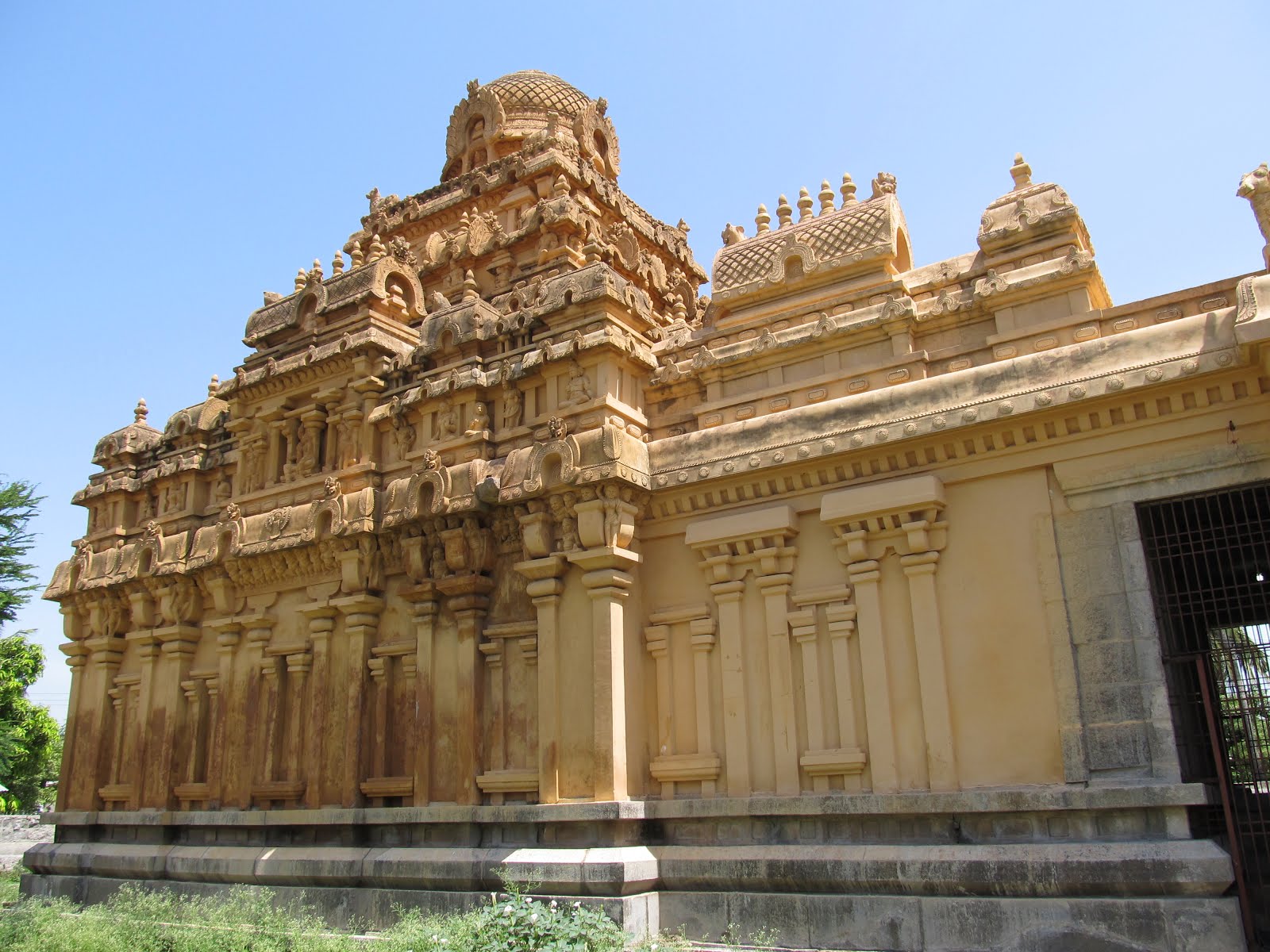
Kailasanathar Temple, Uthiramerur – A Restored Pallava Shiva Temple
Uthiramerur is famous for its inscriptions on village administration. Understandably, the Vaikunta Perumal Temple and the old Sabha inscriptions attract much of the attention.
But Uthiramerur has another old temple that deserves a closer look.
The Kailasanathar Temple, dedicated to Shiva, is much smaller and quieter. There is no towering gopuram to announce its presence. Yet the temple preserves a Pallava core, later inscriptions from several dynasties and an architectural feature inside the sanctum that immediately recalls other Pallava Shiva temples.
A Pallava Temple with Later Layers
The Kailasanathar Temple is generally attributed to the reign of Pallava king Dantivarman, who ruled from the late eighth into the first half of the ninth century.
The original temple did not remain untouched.
The Cholas who subsequently controlled Uthiramerur patronised the shrine and left inscriptions here. Later, the Vijayanagara rulers too made additions and endowments. The front mandapa belonged to this later phase.
Thus, although the temple looks small today, its history stretches across several ruling dynasties.
The inscriptions are particularly valuable. Records associated with Aditya Chola, Rajendra Chola I, Krishnadevaraya and the later Vijayanagara period have been identified here. They record gifts and arrangements connected with worship and the maintenance of the temple.
In Chola-period inscriptions, Shiva here was referred to as Kailayamudaiya Mahadevar.
Kailasanathar and the Somaskanda
The sanctum enshrines a fairly large Shiva Linga worshipped as Kailasanathar.
Nandi faces him from outside.
But do not stop with the Linga.
Look at the rear wall inside the sanctum.
There is a representation of Somaskanda, showing Shiva with Uma and their son Skanda. Somaskanda panels placed behind the Shiva Linga are strongly associated with Pallava Shaiva temples, and finding one here immediately gives the small shrine a much larger architectural context.
To me, this is the most interesting feature of the temple.
The arrangement connects this relatively little-known temple at Uthiramerur with the architectural language seen in better-known Pallava monuments around Kanchipuram and Mamallapuram.
An Unusual Sanctum
The construction of the sanctum itself deserves attention.
It follows the sandhara plan. In simple terms, the sanctum has an inner and outer wall with a narrow circumambulatory passage between them.
The vimana rises above this inner structure.
The lower portions of the temple use granite, while brick and lime mortar were employed in the superstructure. The restored vimana has two tiers and contains several stucco figures.
The overall temple remains surprisingly compact.
When I first visited, what struck me was how sparse it appeared compared with most functioning Shiva temples. The devakoshtas, the recessed niches along the sanctum walls, did not contain the usual stone murtis. Nor was there a huge collection of subsidiary shrines competing for attention.
That simplicity allows the old structure itself to stand out.
A Temple That Almost Collapsed
What we see today could easily have been lost.
By the beginning of the twenty-first century, Kailasanathar Temple was in a severely deteriorated condition. Thick vegetation had grown over the vimana. The front mandapa had collapsed, the ardhamandapa was damaged, and several granite blocks in the foundation had developed cracks.
The REACH Foundation took up the conservation of the temple in 2008.
The restoration was not simply a matter of replacing old stones with new ones.
Where foundation stones had cracked, conservators worked with engineers to strengthen the original granite rather than remove it. Holes were drilled across the cracks, stainless-steel rods were inserted and the stones were bonded together. This allowed much of the historic material to remain where it had stood for centuries.
The brick vimana was restored using lime rather than cement, and the collapsed mandapas were reconstructed using surviving original components wherever possible.
The work also produced some unexpected discoveries.
Six inscriptions came to light during restoration. Archaeological work revealed Pallava-period balustraded steps, a small Nandi sculpture and reliefs associated with the Shaiva saints Appar, Sambandar and Sundarar.
The Kumbhabhishekam was eventually performed after the restoration.
More Than the Famous Uthiramerur Inscriptions
Most people who come to Uthiramerur are understandably interested in its celebrated inscriptions connected with local self-government.
But that should not become the only story of the town.
Kailasanathar Temple tells another one.
There is the Pallava sanctum with its Somaskanda. Chola inscriptions record centuries of continued worship. Vijayanagara rulers added their own layer. Then, after the structure had almost reached the point of collapse, modern conservation gave it another life.
It is a small temple.
Its history is anything but small.
Happy travelling.


Comments
Post a Comment